What a five-generation workforce means for culture, leadership, and performance
Five generations now work side by side, creating both opportunity and tension. Drawing on insights from Oxford Elevate and Q5 workshops, this article explores how organisations can understand their culture, lead inclusively, and connect people through shared purpose to unlock collaboration, improve wellbeing, and enable the next generation to contribute and thrive.
Reading time: 5 minutes
Each year, Oxford Elevate hosts a one-day forum exploring key workplace topics – historically focused on Diversity & Inclusion. This year, the spotlight was on Gen Z and intergenerational dynamics.
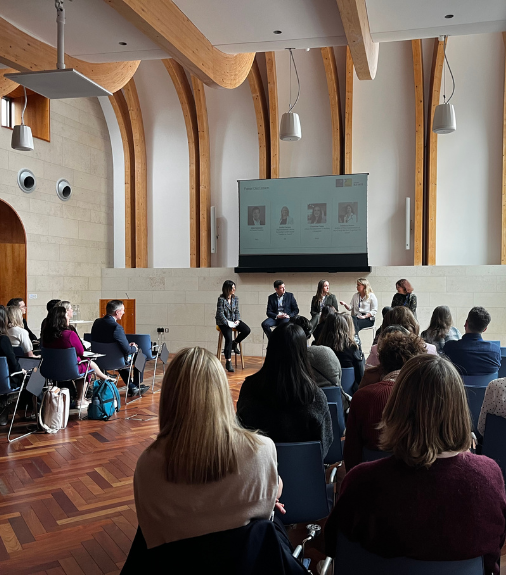
The event brought together senior leaders, researchers, and practitioners for a day of evidence-led insights into the realities of today’s multigenerational workforce. As co-sponsors, Q5 designed and facilitated two interactive workshops, building on the lecture content and creating space for participants to share perspectives and practical insights.
In this article, we reflect on the day, the workshops we ran, and the key takeaways for organisations navigating an increasingly multigenerational workforce.
It was a pleasure to attend Oxford Elevate’s “Gen Z and Intergenerational Dynamics” event at the University of Oxford. The day featured a series of thought-provoking perspectives, including lectures by:
Dr Grace Lordan on managing a multigenerational workforce
Paul Johnson on growth and inequality
Dr Mathias Jensen on the mental health crisis
The day also featured a panel discussion exploring how organisations can navigate multigenerational dynamics in practice. The panel included Professor Banu Demir (University of Oxford), Mike Robinson (P&G), Charlotte Cutter (Arup), Rebecca Robins, Author of “Five Generations at Work: How We Win Together for Good”, and Q5’s Emilia Persson.
You can watch the full panel discussion below:
Why does a multigenerational workforce matter now?
For the first time, five generations are working side by side. This presents a significant opportunity: organisations can tap into a rich diversity of perspectives, skills, knowledge, and experience.
However, it also brings real challenges. Three common tensions include:
Differing needs, expectations, and priorities
Persistent generational stereotypes
Varied communication styles leading to misalignment or misunderstanding
Organisations must actively navigate these dynamics to unlock the benefits that a multigenerational workforce presents.
Why the focus on Gen Z?
Gen Z (those born between 1997 and 2012) is the most educated generation to date – yet UK youth employment is at a 10-year low. Mental health is now the leading cause of long-term absence, with increasing disengagement from work among younger employees.
This has wide-reaching implications – not just for individuals, but for organisations and society as a whole.
Our workshops: key questions
Our two workshops were designed to build on the themes from the lectures and encourage participants to reflect on what these insights mean for their own organisations.
We explored questions such as:
How can organisations design multigenerational workplaces that foster growth and progress for all?
What tensions arise between generations, and how are these shaped by economic mobility, opportunity, and insecurity? What can organisations do to ease or resolve these tensions?
How can organisations ensure that everyone can contribute to – and benefit from – a multigenerational workforce?
How can organisations better support mental health, wellbeing, and productivity – particularly for Gen Z employees?
Through facilitated discussion and targeted prompts, participants were encouraged to shift between perspectives and translate insight into practical action for their own contexts.
Key reflections from our team
Drawing on the discussions from the day – as well as our experience supporting organisations over the past decade – we’ve captured three key considerations for those looking to make the most of a multigenerational workforce.
Start with understanding your current culture
There is no “one size fits all”. Healthy organisations have cultures that are distinctive, reflecting their history, strategy, and context. Ergo, to design interventions that support a healthy organisational culture, organisations must first understand their current reality.
This requires a holistic and inclusive approach, considering both the “hard” and “soft” elements of culture, and actively listening to lived experiences across different age groups and roles.
In the context of a multigenerational workforce, this means exploring questions such as:
What beliefs and assumptions about age and generational differences exist?
How do systems, processes, and ways of working enable, or hinder, intergenerational inclusion?
Leaders set the tone
Inclusive leadership is foundational to building a culture that fully harnesses the benefits of diversity. Leaders shape the environment through what they do, say, prioritise, reward, and what they choose to ignore.
These signals directly influence whether people feel psychologically safe: able to speak up, contribute ideas, challenge constructively, and learn from mistakes.
When this is in place, it drives stronger engagement and collaboration, and enables organisations to tap into the full value of a diverse, multigenerational workforce.
This starts with self-awareness. Leaders should ask themselves:
How do my instincts and biases show up?
How inclusive are my actions and decisions toward those different from me?
How do I (or what can I do to) role model and encourage inclusive behaviours in others?
Connect people through shared purpose
A strong sense of shared purpose, values, and identity helps bridge generational differences and foster a culture of mutual respect. When people feel connected to something bigger than themselves, they are more motivated, collaborative, and engaged.
Importantly, this also fosters a sense of belonging and identity, which plays a key role in supporting mental health and well-being.
To enable this, organisations need to:
Understand what matters most to their people
Clearly link individual contributions to organisational purpose
Co-create team-level values and ways of working
Following the Oxford Elevate: Gen Z & Intergenerational Dynamics event, we are pleased to share the workshop outputs from the day.
As designers and facilitators of the workshops, we have created a short synthesis document bringing together the key insights, themes, and ideas generated across the sessions. The document reflects the collective perspectives shared during the workshops and highlights practical implications for organisations working across generations.
Download the key findings document at the bottom of the page.
Conclusion
As organisations navigate an increasingly complex and multigenerational workforce, the opportunity is clear, but so is the challenge. Unlocking the benefits of diversity is not automatic; it requires deliberate effort.
What stood out from the day is that success does not come from quick fixes or one-size-fits-all solutions. It comes from understanding your culture, leading with intention, and creating the conditions for people to contribute, collaborate, and thrive.
Get in touch
If any of these themes resonate or present a challenge in your organisation, we would welcome a conversation. Get in touch with Stefania below to explore how we can help you navigate and unlock the potential of a multigenerational workforce.
We serve cookies. If you think that's OK, just click "Accept all". You can also choose what kind of cookies you want by clicking "Settings".
Read our cookie policy

 by
by