Nurturing the skills of tomorrow’s line managers
Global events have propelled hybrid working, emphasising the need for an agile, diverse workforce, focusing on flexibility, work-life balance, and growth opportunities in the process. Amid mental health challenges, employee well-being is crucial.
Line managers are pivotal in employee experience, which is why they require development. So, what are the key areas in which line managers need training?
Reading time: 2 minutes
Global events of the past four years accelerated the uptake of hybrid working, fostering an increasingly agile, diverse workforce. This has enabled people to exert more control over how they shape work around their lives. As a result, employees want to work in organisations offering flexibility, work-life balance, and opportunities for growth.
As more employees grapple with the mental health implications of the cost-of-living crisis, conflict and natural disasters happening across the world, organisations must prioritise employee wellbeing. Therefore, line managers who are central to the employee experience must play a pivotal role in how successful organisations respond.
Particularly as 75% of workers leave their jobs for reasons directly influenced by their line manager. This means organisations must place significant investment into helping line managers develop the right skillset.
What are the key areas of development for line managers of the future?
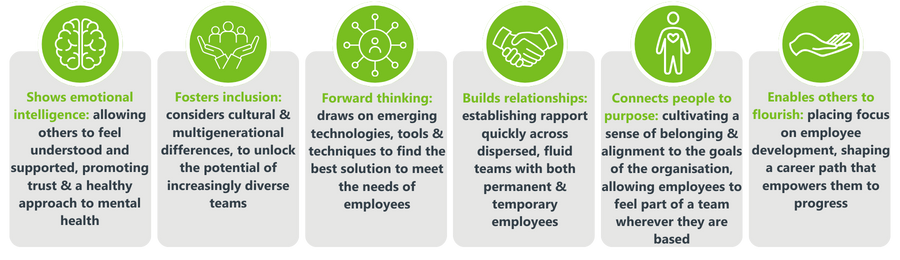
How can organisations foster these skills?
To become highly effective, line managers must be nurtured and supported. Too often, employees are left to their own devices, with little or no guidance on what ‘good looks like.’ Now and in the future, these are key elements to focus on with the line manager population:
- Update your development programme to match the future of work. Create a clear learning path for your line managers. Regularly refresh your program to stay in line with the latest insights.
- Set clear expectations: Provide clear direction to line managers on their roles & responsibilities, framing it in the most current context for employees.
- Provide support: In order for them to deliver support to employees, line managers also need to feel there is care & guidance available. This should include opportunities for coaching, de-briefs, and development conversations.
- Having leaders who role model these skills: Increase visibility of leaders role modeling the behaviours you expect in line managers, finding ways to engage outside of the traditional format, to ensure you reach employees regardless of when and where they are working.
- Recognition: Provide regular overt recognition of the value and importance of their job. This is a chance to both celebrate and acknowledge the challenging nature of being a line manager in an ever-evolving workplace.
If this topic is of interest or you have any questions. We would love to chat!

Chloe Cardon
Principal Consultant
[email protected]
1 5 Takeaways from LinkedIn’s New Global Talent Trends Report | LinkedIn
2 Turning Around Employee Turnover (gallup.com)

 by
by