Why culture is the ultimate performance advantage
Elite football teams invest heavily in strategy, talent and analytics, yet performance gaps remain. The difference often lies in culture. This article explores the lessons leaders in any sector can learn from professional football organisations by observing how they create alignment, accountability, and resilience in order to drive sustained performance and success.
Reading time: 4 minutes
In performance environments, culture is the edge
From podcasts to boardrooms, “high performance” is everywhere. Organisations large and small are looking for the next lever for step changes or precious few percentage increases in Performance.
But most high-performance levers have become table stakes. For example, in elite performance environments like professional football there is already heavy investment in setting strategy, talent, analytics, nutrition, coaching and psychology. Yet teams with comparable resources don’t perform comparably.
In sports and across sectors the difference often lies in Culture. For instance, how vision and strategy are communicated, how leaders align, how standards and expectations are reinforced and how people behave under pressure.
The takeaway is simple: Culture is the operating system that elevates an organisations performance.
Here, we highlight what “Culture” is, examples of Culture and Performance offered by professional football, and how leaders in any organisation might think about their own Culture to elevate Performance.
What is organisational culture?
Where Strategy provides focus for action and decision making, operating model and structure groups value add work into logical functions, culture is about how an organisation operates.
You’ve heard the adage – ‘culture is the way we do things around here’. Deceptively simple, but it encapsulates something that management literature cannot define simply.
Culture shows up in:
- How work is allocated and how it gets done
- The way in which accountability and ownership is distributed across teams and leaders
- How leaders set the tone and expectations that have a ripple effect across the whole organisation
- Everything employees think, do, say and feel at work
- The organisation’s collective and commonly held values, beliefs, behaviours and symbols.
It’s the combination of Strategy, Operating Model and Culture that ultimately drives performance and determines success.
Four culture differentiators in elite professional football
Leaders must pay attention to culture.
By proactively listening and engaging with teams, measuring and tracking sentiment, especially during periods of adversity, leaders can capture the ‘feeling’ of their organisation and respond adequately.
They can also look externally for inspiration.
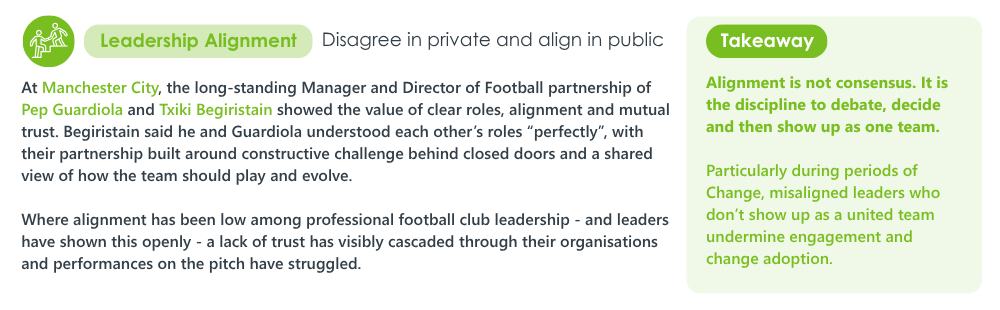
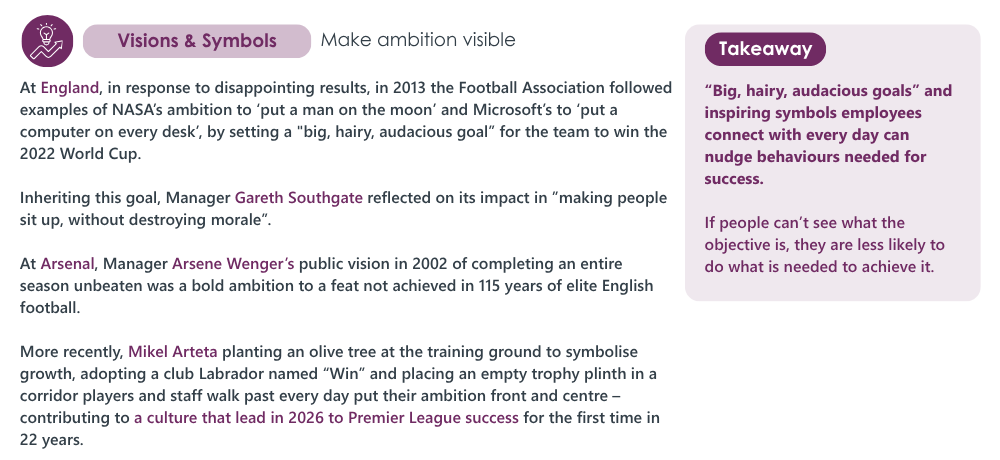
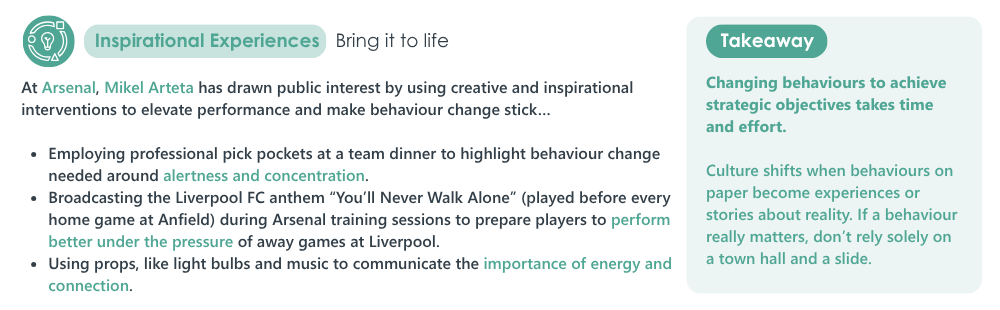
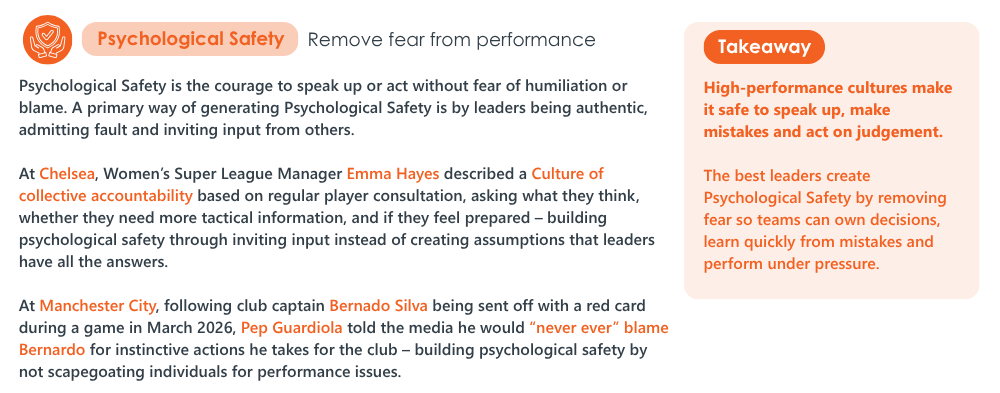
Recently we’ve been curious about how elite professional football teams build and maintain a sustainable, high-performance culture. Below are some key lessons we think are invaluable for leaders grappling with cultural challenges today.
How we think about culture at Q5
At Q5 we recognise culture is the operating system of our client’s organisations, enabling their Operating Models and strategic objectives.
We look at culture diagnosis (measuring culture) through two lenses: Culture Health & Culture Personality.
- Culture Health is measured using 5 Culture Indicators (Inclusion, Psychological Safety, Collaboration, Engagement, and Fairness) we believe should be valued and rewarded in any organisation.
- Culture Personality is mapped through 16 subjective Culture Dimensions that articulate what it feels like to be a part of an organisation’s Culture, and what impact this has on success.
We look at Culture Activation (bringing culture to life) in terms of a range of levers leaders can pull, including Leadership Effectiveness, Performance Management, Storytelling and even Organisation Design.
To find out more about what we think about culture and performance, check out our Development & Culture work or drop us a line.

Dale Graham
[email protected]
Organisational Culture Lead

 by
by