Choosing the right workforce planning approach for your organisation
There is no one-size-fits-all strategy for workforce planning. Strategic Workforce Planning (SWP) helps organisations plan for the long term. Whereas Tactical and Operational Workforce Planning address short-term to mid-term needs and respond to immediate needs.
Understanding when to apply each approach is critical to workforce resilience, cost efficiency, and business success. Which planning approach is right for you?
Reading time: 3 minutes
Navigating short-term challenges that impact the capability, capacity, and cost of your workforce can feel overwhelming. These urgent issues often dominate decision-making discussions in many of the organisations we support. In the UK, regulatory and economic constraints are placing mounting pressure on hiring at the right cost. As employee expectations shift and geopolitical uncertainty increases, maintaining a workforce that can meet immediate business goals can become an all-consuming effort.
Yet focusing only on the short term puts organisations at risk of missing the bigger picture. Those aiming for sustainable, cost-effective growth must take a more strategic view.
Strategic Workforce Planning strategies enable organisations to look beyond today’s gaps. Helping them to anticipate the skills and capabilities required to deliver on long-term goals. It’s not just about filling roles, it’s about building a workforce that is purpose-fit and future-ready, at the right cost.
Strategic, Tactical, or Operational Workforce Planning – which one does your organisation need?
Many organisations turn to Strategic Workforce Planning (SWP) as a catch-all solution for their workforce needs. But is it always the right approach?
In reality, businesses often face more immediate and evolving workforce challenges that require a different strategy, Tactical or Operational Workforce Planning. Therefore, it is essential to understand when to focus on long-term workforce strategy and when to act swiftly. Developing this skill is critical to building a resilient and effective workforce.
Workforce planning approaches
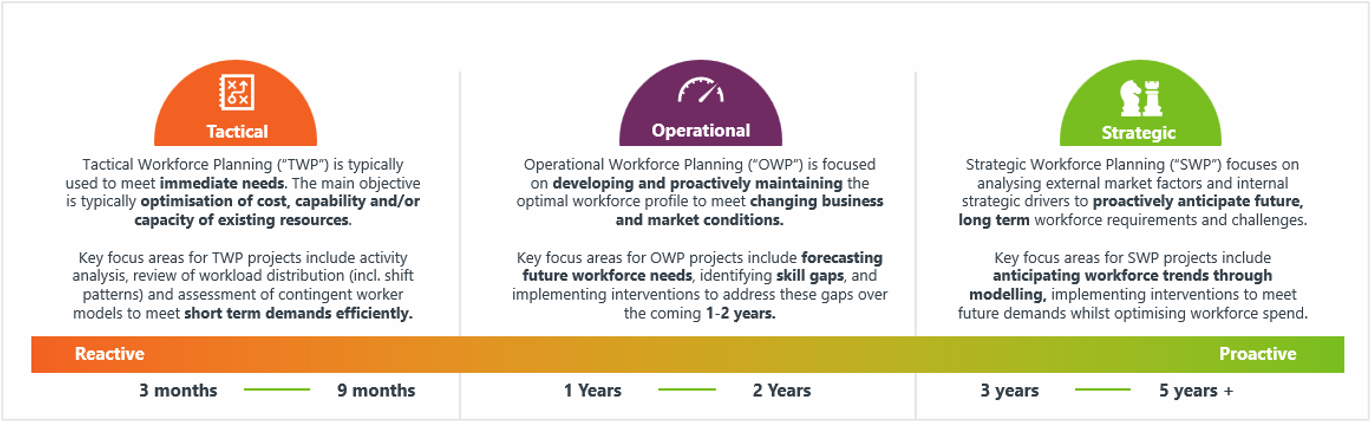
- Tactical Workforce Planning (TWP): reacting to immediate needs
Tactical Workforce Planning is the best fit if your organisation needs a fast response to workforce challenges. For example, resource distribution issues or eliminating duplication/gaps in the delivery of work. Typically, a TWP is applied over a 3-9 month period. It helps businesses optimise cost, capability, and capacity of the existing workforce to meet short-term demand spikes.
- Operational Workforce Planning (OWP): preparing for change
For organisations anticipating changes in business conditions over the next 1-2 years, Operational Workforce Planning is key. OWP focuses on forecasting workforce needs, identifying skill gaps, and maintaining an optimal workforce profile. Although it applies to the near term, an OWP is flexible and supports future changes in conditions.
- Strategic Workforce Planning (SWP): future-proofing the workforce
If your goal is to proactively shape your workforce over the next 3 to 5+ years, SWP is the way forward. It involves modelling workforce trends, aligning strategy with potential market shift scenarios, and identifying the impact on future skills gaps and surplus. SWP is essential for organisations looking to build a long-term competitive advantage through targeted investment in the optimum talent strategy. Download our guide on delivering a Strategic Workforce Plan here.
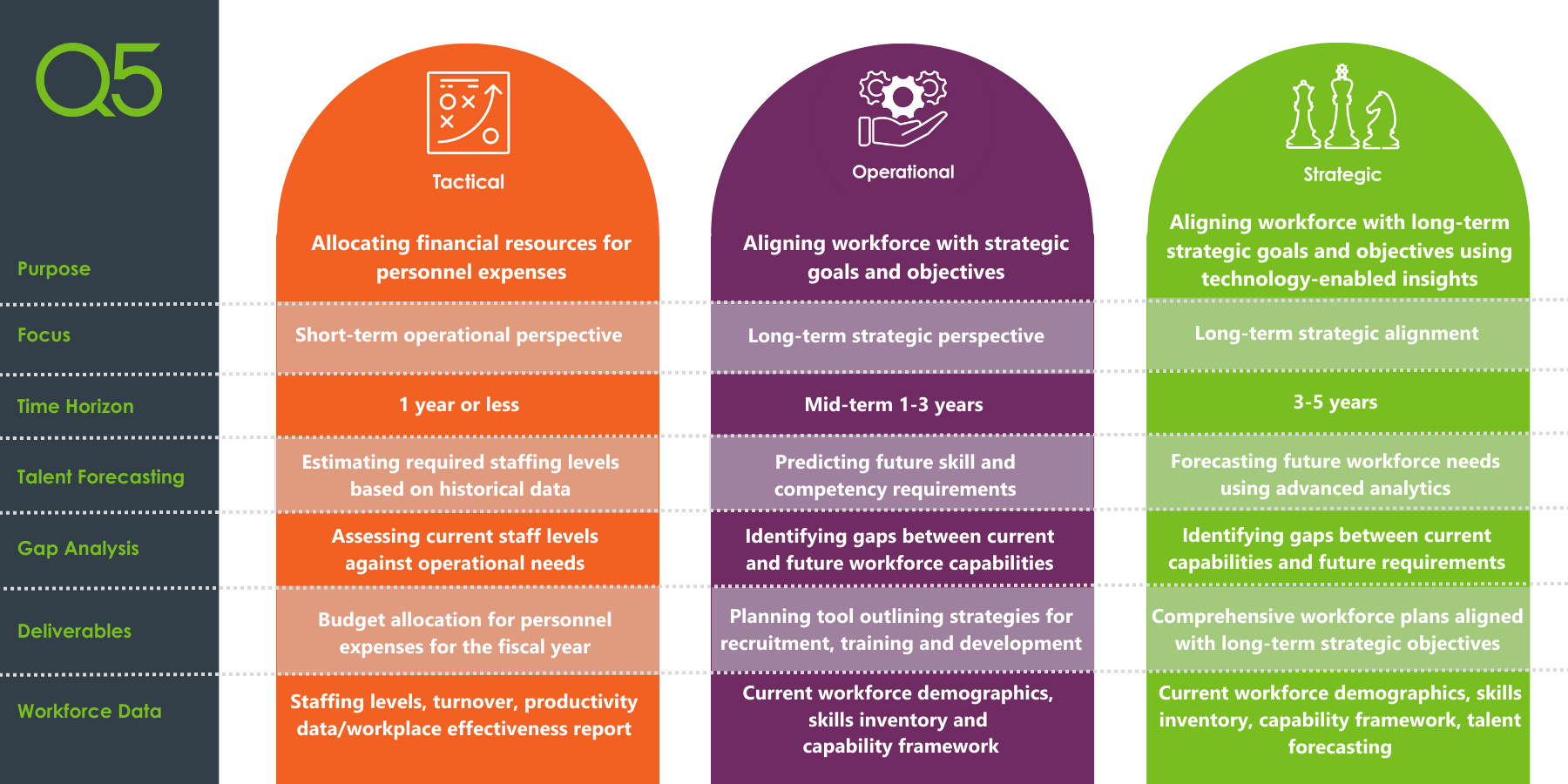
Choosing the right approach
Below are the features of each Workforce Planning type to help you choose the right workforce plan.
Need help defining your workforce planning strategy? Contact our experts

 by
by